
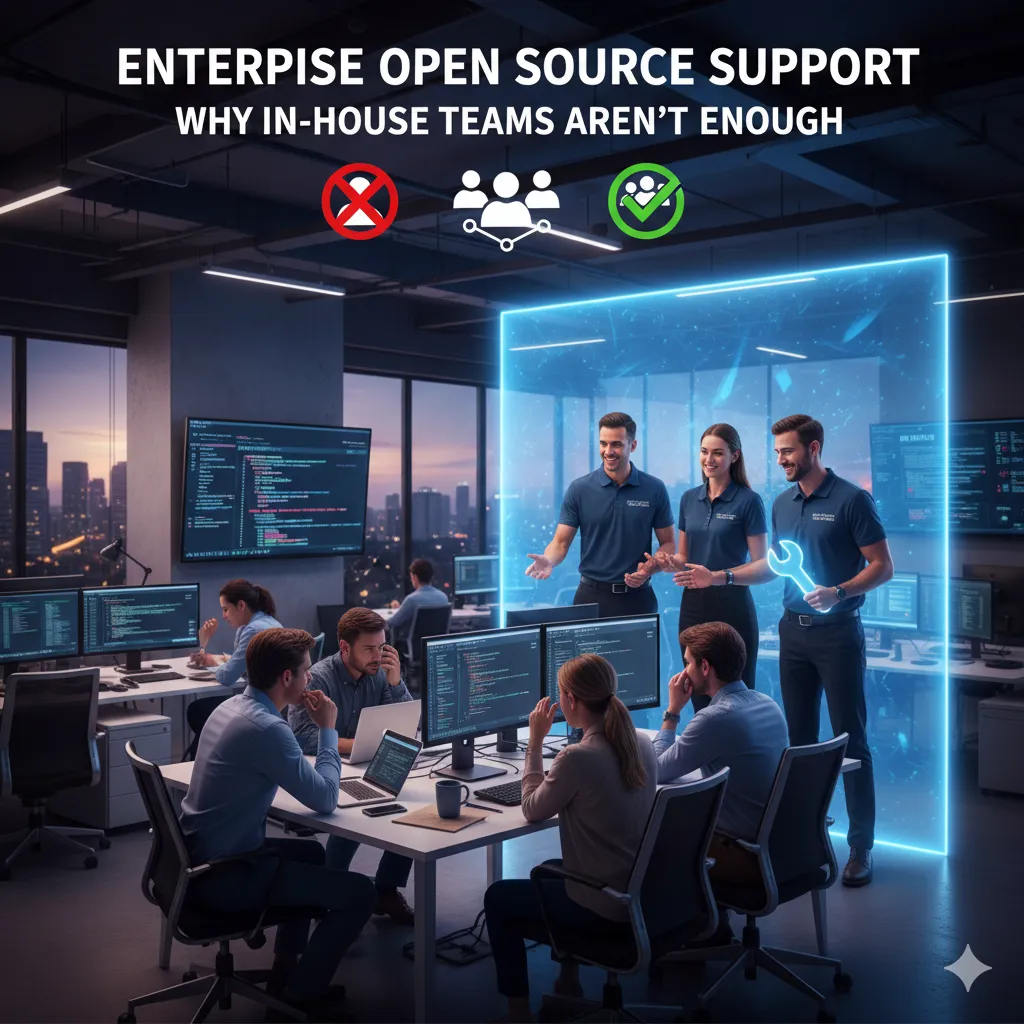
Enterprise Open Source Support: Why In-House Teams Aren’t Enough
The adoption of open source software in enterprise environments has grown exponentially over the past decade. Organizations across industries have embraced Linux distributions, container technologies, database systems, and countless other open source solutions as fundamental building blocks of their IT infrastructure. While many companies believe their internal IT teams can handle all aspects of managing these technologies, the reality of enterprise-scale deployments tells a different story. The complexity, security demands, and operational requirements of modern open source ecosystems often exceed what even the most skilled in-house teams can manage alone.
The Complexity Challenge of Modern Open Source Deployments
Enterprise environments rarely consist of simple, straightforward technology stacks. Instead, they involve intricate webs of interconnected systems, each with its own dependencies, configurations, and integration requirements. When your organization runs critical business applications on open source platforms, you’re not just managing a single piece of software. You’re orchestrating an entire ecosystem that includes operating systems, middleware, databases, monitoring tools, and countless libraries and dependencies.
In-house IT teams, no matter how talented, face significant limitations when dealing with this complexity. They typically lack the deep, specialized knowledge that comes from working exclusively with specific open source technologies day in and day out. While your internal team might be excellent at general system administration, they may not have intimate knowledge of the kernel-level optimizations available in enterprise Linux distributions, or the intricate details of how container orchestration platforms handle network policies under high load conditions.
Professional Open Source software Support providers employ engineers who spend their entire careers focused on specific technologies. These specialists have encountered virtually every edge case, configuration challenge, and integration scenario imaginable. They bring this accumulated wisdom to every support engagement, providing insights that would take your internal team years to develop independently. When a critical issue arises at three in the morning, having access to this level of expertise can mean the difference between a minor incident and a catastrophic outage.
Security Vulnerabilities Demand Specialized Expertise
Security has become the paramount concern for enterprise IT operations, and open source software presents unique challenges in this domain. New vulnerabilities are discovered constantly, and the window between disclosure and exploitation continues to shrink. Your organization needs to identify, assess, prioritize, and remediate security issues across your entire technology stack, often within hours rather than days.
Internal teams typically struggle to keep pace with the volume and velocity of security information flowing through the open source ecosystem. They must monitor multiple sources, including CVE databases, security mailing lists, vendor advisories, and community forums. They need to understand not just whether a vulnerability exists, but whether it affects your specific deployment configuration, what the real-world risk level is, and how to apply patches without disrupting operations.
Professional support providers maintain dedicated security response teams that do nothing but track, analyze, and respond to vulnerabilities. These teams have direct relationships with upstream project maintainers and security researchers. They often learn about critical vulnerabilities before public disclosure, giving their customers precious additional time to prepare. They also provide pre-tested, validated patches that have been verified to work correctly in production environments, reducing the risk that comes with emergency patching.
Beyond reactive security measures, Open Source software Support contracts typically include proactive security hardening guidance. Vendors like Red Hat, SUSE, and Canonical provide security-enhanced versions of their distributions with additional protections enabled by default. They offer detailed security advisories that explain not just what the vulnerability is, but how to verify whether you’re affected and what compensating controls you can implement if immediate patching isn’t feasible.
The Hidden Costs of Going It Alone
Many organizations view professional open source support as an unnecessary expense, believing they can save money by relying exclusively on internal resources. This perspective fails to account for the true total cost of ownership when managing enterprise open source deployments without vendor support. The apparent savings often evaporate when you factor in the hidden costs of the do-it-yourself approach.
Consider the opportunity cost of having your best engineers spend their time researching obscure technical issues instead of working on strategic initiatives that drive business value. When a complex problem arises with your database cluster or your container platform, your senior engineers might spend days digging through source code, testing theories, and searching for solutions. Meanwhile, projects that could generate revenue or improve operational efficiency get delayed.
There’s also the risk cost to consider. Without professional support backing your open source infrastructure, every major issue carries the potential for extended downtime. Your internal team might eventually solve the problem, but how much revenue does your organization lose for every hour that critical systems remain unavailable? How many customers does poor performance drive away? What’s the reputational damage when service interruptions make headlines?
The staffing challenge represents another hidden cost. Retaining engineers with deep expertise in specific open source technologies requires competitive compensation and opportunities for skill development. Professional support relationships provide your team with access to vendor training, certification programs, and direct mentorship from recognized experts. This knowledge transfer helps your internal staff grow their capabilities while ensuring you always have access to world-class expertise when you need it most.
Compliance and Certification Requirements
Regulated industries face additional pressures that make professional Open Source software Support nearly essential. Financial services firms, healthcare organizations, government agencies, and other regulated entities must demonstrate compliance with various standards and regulations. These compliance frameworks often require specific security controls, audit capabilities, and support arrangements that community-supported open source software alone cannot provide.
Enterprise open source vendors provide compliance-ready versions of their products with extensive documentation, audit logging, and certified configurations. They can supply the attestations and certifications that auditors demand. They maintain detailed records of security patches and updates. They provide the paper trail that proves your organization has taken reasonable measures to protect sensitive data and maintain system integrity.
Your internal team, working with community distributions and unsupported software, faces a much steeper climb to demonstrate compliance. They must develop and maintain their own security documentation, create their own patch management procedures, and essentially build from scratch the compliance infrastructure that commercial vendors provide as a standard part of their support offerings. For many organizations, this additional burden tips the cost-benefit analysis firmly toward professional support contracts.
Strategic Partnerships Beyond Break-Fix Support
Modern enterprise open source support goes far beyond simply fixing things when they break. Leading vendors have evolved their support offerings into strategic partnerships that help organizations architect better solutions, optimize their infrastructure, and plan for future growth. This consultative relationship delivers value that purely reactive support could never provide.
When you establish a relationship with a major open source vendor, you gain access to their technical account managers, solution architects, and engineering teams. These professionals work with hundreds of enterprises and can share best practices learned across their entire customer base. They can review your architecture and suggest improvements. They can help you design for scalability, performance, and resilience based on real-world experience with similar deployments.
Support contracts also give you influence over the product roadmap. Vendors pay attention to the feature requests and pain points reported by their enterprise customers. Your feedback can shape the future direction of the technologies you depend on. You might even get access to early releases, beta programs, and preview features that let you test new capabilities before they become generally available.
The knowledge transfer that happens through these partnerships elevates your entire team’s capabilities. Support interactions become learning opportunities. Your engineers develop deeper understanding by working alongside vendor specialists on real production issues. Over time, your internal team becomes more self-sufficient, but they always have expert backup when situations exceed their experience or when they need validation for critical decisions.
Making the Case for Professional Support
Building internal support for professional open source support requires demonstrating the business value these partnerships deliver. Start by quantifying the risks your organization faces without vendor backing. Calculate the potential cost of extended outages, security breaches, or compliance failures. Document the time your team currently spends on issues that vendor support could resolve more quickly.
Present Open Source software Support not as an insurance policy for unlikely disasters, but as a strategic investment in operational excellence. Show how vendor relationships accelerate time-to-market for new initiatives by reducing technical uncertainty. Demonstrate how access to expertise enables your team to tackle more ambitious projects confidently. Highlight how the knowledge transfer from support interactions builds your organization’s long-term capabilities.
Consider starting with targeted support contracts for your most critical systems rather than trying to implement comprehensive support across your entire technology stack immediately. This approach lets you demonstrate value quickly while building internal momentum for broader adoption. As stakeholders see the benefits in action, expanding your support coverage becomes an easier conversation.
The question isn’t whether your in-house team is talented enough to manage open source software without vendor support. Most enterprise IT teams include brilliant engineers fully capable of solving complex technical problems. The real question is whether going it alone represents the best use of their time and your organization’s resources. In most cases, the answer is clear: professional support partnerships provide the expertise, efficiency, and risk mitigation that allow your internal team to focus on what matters most—driving your business forward.
News editor and RSS curation specialist, 11 years
Daniel spent six years as a digital desk editor at a regional newspaper in Manchester, where he built and maintained more than 400 RSS and API feeds for breaking news coverage. He later worked as a content curation lead for a media monitoring firm, training a team of 14 analysts to filter sources for accuracy and relevance. At LynxFeed he writes about feed readers, news aggregation and practical ways to follow reliable sources without wasting time.
Related posts