
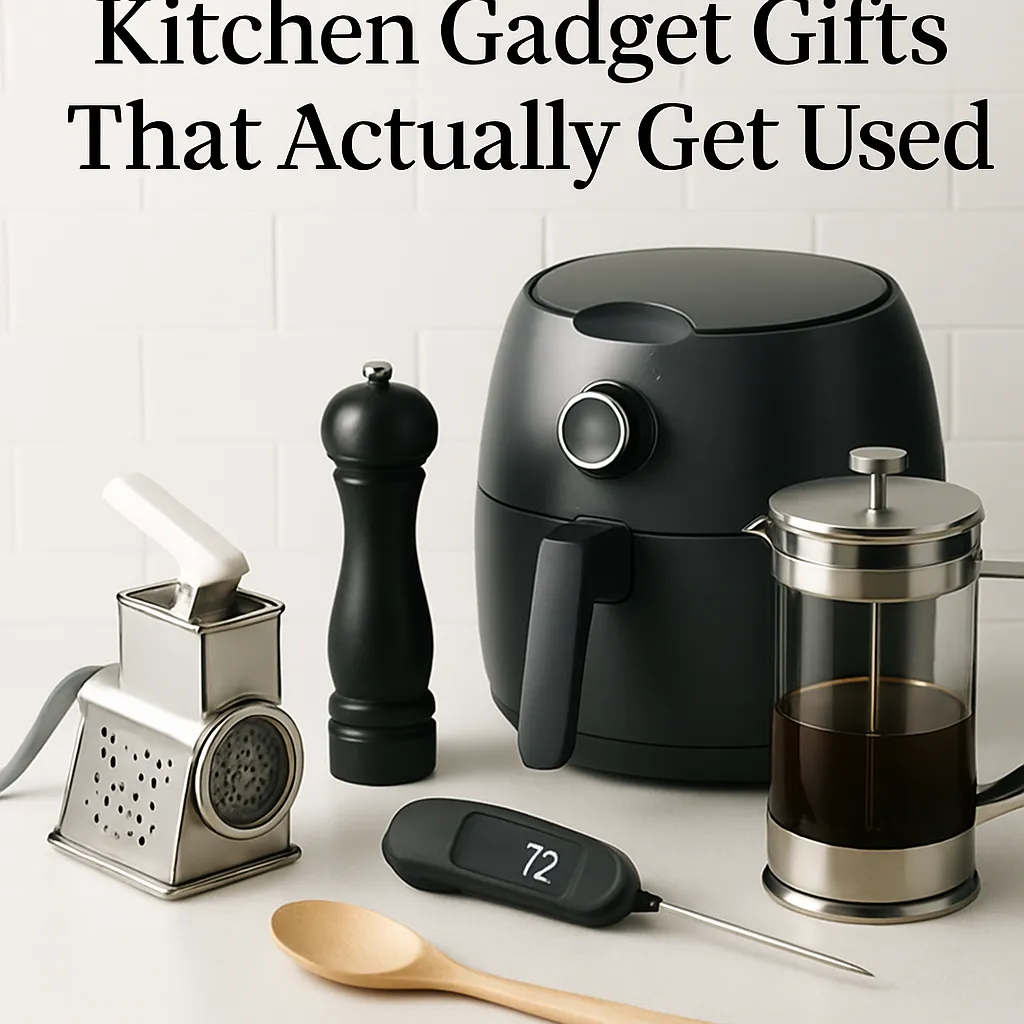
Kitchen Gadget Gifts That Actually Get Used
Anyone who has ever unwrapped a kitchen gadget only to shove it in a drawer and forget about it knows the struggle of finding kitchen gadget gifts that people genuinely want. The good news is that the gap between a gift that gets used every single day and one that becomes clutter usually comes down to a handful of simple factors, and once you know what to look for, picking the right present becomes a lot less stressful.
Why the best kitchen gifts solve a real problem
The kitchen gadgets that stick around long term are almost always the ones that fix an annoying, everyday frustration rather than the ones that try to do something flashy but rarely useful. Think about the small moments that make cooking harder than it needs to be, awkward jar lids, slippery cutting boards, herbs that go bad before you use half the bunch. A gift that solves one of those tiny daily annoyances earns its spot on the counter fast, while a novelty item that only works for one obscure task usually ends up forgotten within a week.
Matching the gift to how someone actually cooks
Not every kitchen gadget suits every cook, and paying attention to someone’s actual habits makes a huge difference in whether a gift lands well. Someone who bakes constantly will appreciate precise tools like a digital scale or a reliable dough scraper, while someone who lives for quick weeknight dinners might get far more mileage out of a good chopper or a multi use prep tool. Watching how a person moves through their own kitchen, what they reach for and what frustrates them, gives far better clues than guessing based on trends alone.
Quality over quantity almost always wins
It can be tempting to go for a big flashy gadget set just because it looks impressive when wrapped, but a single well made tool almost always beats a large collection of mediocre ones. Cheap gadgets tend to break quickly, perform poorly, or simply feel unpleasant to use, which pushes people back to their old habits within days. Investing in one genuinely well built item, even if it costs a bit more, signals thoughtfulness and tends to become the piece someone reaches for again and again.
The role of design and counter space
Modern kitchens are often tight on space, and a gadget that looks great in a product photo but takes up half the counter is unlikely to get much use in a small apartment kitchen. Compact, easy to store designs tend to perform better as gifts because they fit naturally into daily routines without demanding a permanent spot on display. Tools that can be tucked into a drawer just as easily as they sit on a countertop tend to earn a longer life in someone’s kitchen.
Adding a personal touch without overthinking it
A little personalization goes a long way without needing to overcomplicate the gift itself. Pairing a practical tool with a small note about why it reminded you of the person, or choosing a color or style that matches their existing kitchen setup, turns a purely functional item into something that feels genuinely thoughtful. The goal is not to reinvent the gift itself but to show that you paid attention to who they are and how they actually live.
Where to start looking
For anyone hunting for reliable kitchen gadget gifts, focusing on well reviewed, genuinely functional pieces rather than chasing the latest viral gadget tends to lead to far better results. A little research into build quality and real user feedback before buying saves you from the drawer of forgotten gifts and gets you much closer to something that actually earns daily use.
Final thoughts
Great kitchen gifts do not need to be expensive or flashy to be memorable. They need to solve a real problem, fit the way someone actually cooks, and be built well enough to last. Keep those three things in mind and almost any kitchen gadget gift has a real shot at becoming a daily favorite instead of another drawer filler.
News editor and RSS curation specialist, 11 years
Daniel spent six years as a digital desk editor at a regional newspaper in Manchester, where he built and maintained more than 400 RSS and API feeds for breaking news coverage. He later worked as a content curation lead for a media monitoring firm, training a team of 14 analysts to filter sources for accuracy and relevance. At LynxFeed he writes about feed readers, news aggregation and practical ways to follow reliable sources without wasting time.